
Galápagos Islands
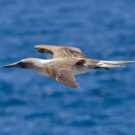
Would you like me to tell you about the Galápagos Islands? Actually, I could have told you about them sixteen years ago. But after my first visit, I was convinced I would return one day, so I deliberately postponed writing about it. The Galápagos went onto my bucket list—and it’s a list I never forget. Time passed, and finally I returned there in the spring of 2026. Now there is no turning back; I simply have to write about it. In 2010, my husband was invited to give a lecture in Quito, the capital of Ecuador. It is one of the highest-altitude capitals in the world, situated at an elevation of 2,850 meters (9,350 feet). The equator runs 26 km (16 miles) north of Quito, and there you can have your photo taken with your left foot in one hemisphere and your right foot in a completely different one. It’s a fun photo opportunity, but Quito deserves to be remembered for much more than that. Its beautifully preserved historic center was added to the UNESCO list back in 1978. I’ve often told myself that travel stories should be written immediately, while every detail is still fresh. Unfortunately, sixteen years later, many of my memories of Quito have faded. The amusing incidents, the conversations, the little discoveries—they’re gone, so I won’t attempt to write about Quito now. I mention the city only because you can fly to the Galápagos either via Quito—which is what we did on our first visit—or via Guayaquil, Ecuador’s largest city, which is the route we took in 2026. If high altitude doesn’t bother you, I’d recommend spending a couple of days in Quito before heading to the islands. It’s well worth your time. One word of advice, though: both Quito and Guayaquil require the same common sense as many other large cities. It’s best to explore with a knowledgeable guide or with local friends, as we did. The Galápagos Islands—an Ecuadorian archipelago in the eastern Pacific Ocean—are famous for many reasons. Charles Darwin visited them in 1835, and his observations of the differences between animals on various islands helped him formulate the theory of evolution. His legacy is honored throughout the islands, and we visited the Charles Darwin Research Station—located in the town of Puerto Ayora on Santa Cruz Island—twice. Numerous research projects and conservation efforts aimed at preserving the unique flora and fauna of the Galápagos are conducted at this station under the auspices of UNESCO. The young giant tortoises we saw will eventually be released onto islands where wild populations need reinforcement. But with all due respect to Darwin, the real stars of the Galápagos are the animals themselves. I’ve traveled to many extraordinary places, but nowhere else have I experienced wildlife quite like this. The animals don’t simply tolerate people—they seem to trust them completely. Birds continue feeding their chicks while you’re standing nearby. Sea lions sleep soundly beside walking paths. Giant tortoises barely bother to look up as you pass. It’s an unforgettable feeling. There are various ways to explore these islands. We experienced two of them, and, in my opinion, each has its own advantages. In 2010, we simply flew to the Galápagos from Quito. However, the word “simply” comes with a caveat. For me, the place with the strictest limits on tourist numbers was Easter Island; I have written about it previously, and those notes can be found on my blog. The Galápagos are somewhat easier to visit, but not by much. Only two airlines—Avianca and Latam—operate regular flights to the islands, so I wouldn’t wait too long before booking your tickets. Back in 2010, we reserved a hotel in advance but left the rest of the planning until we arrived. Once we arrived to the main tourist hub of Puerto Ayora on Santa Cruz, we visited a local tour agency and booked day trips to different islands. Every morning we set off in small boats. If you don’t get seasick in a small boat on the open ocean, consider yourself fortunate. I wasn’t so lucky. At that time, I knew very little about seasickness medications, and every boat ride was an ordeal. But the moment we stepped ashore, the magic began and pure happiness set in. I didn’t get my first camera with a serious lens until later, but my trusty little Canon took perfectly acceptable portraits, and the animals and birds seemed delighted to pose for me. They opened their mouths and beaks, fed their babies, and struck the most entertaining poses. I completely fell in love with the blue-footed booby. Its English name delights me. “Booby” can mean a fool, a...
Прочитайте больше
Свежие комментарии