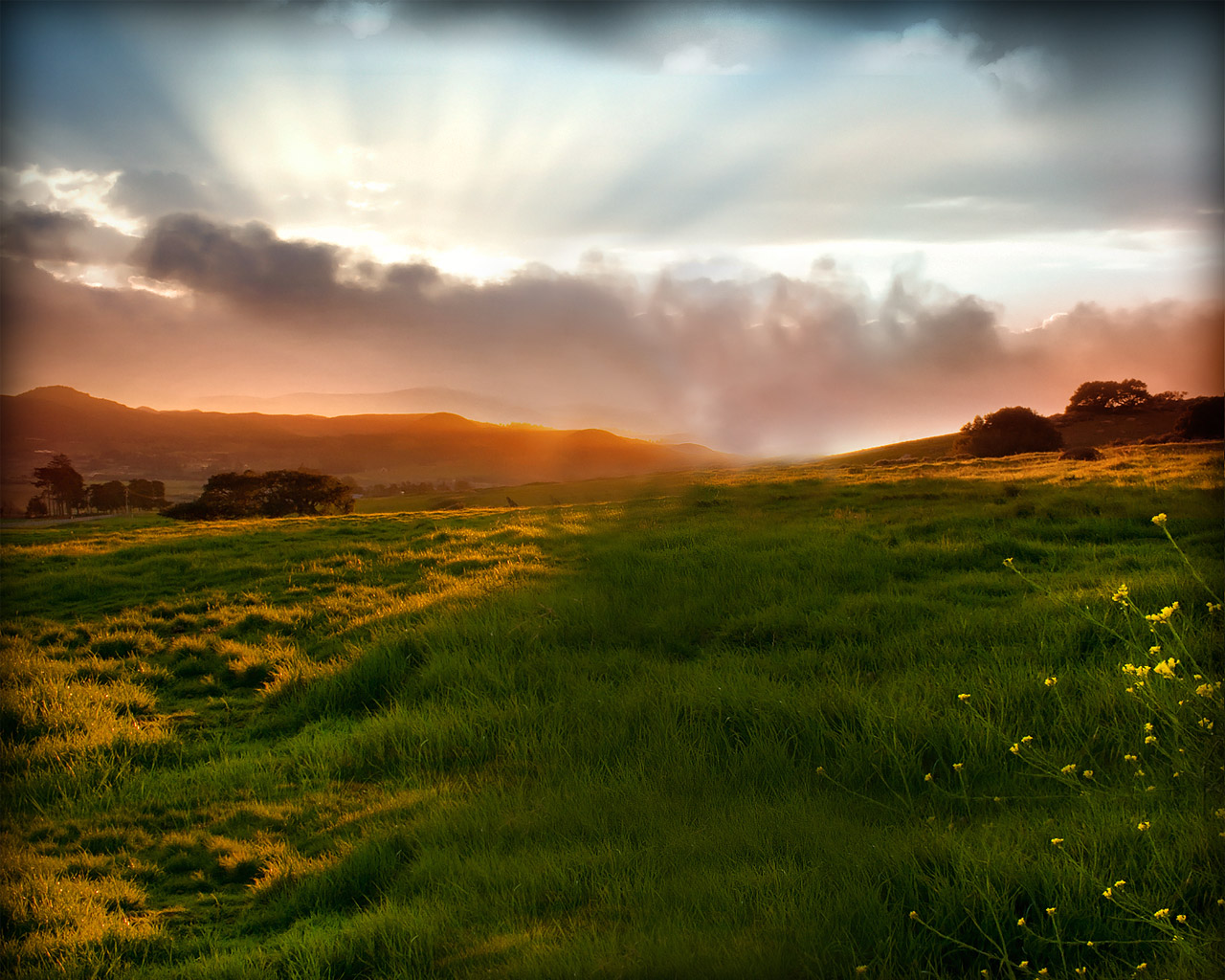

Galápagos Islands
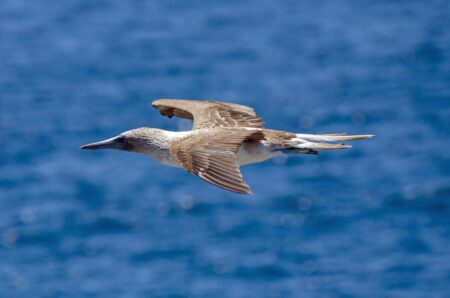
Would you like me to tell you about the Galápagos Islands? Actually, I could have told you about them sixteen years ago. But after my first visit, I was convinced I would return one day, so I deliberately postponed writing about it. The Galápagos went onto my bucket list—and it’s a list I never forget.
Time passed, and finally I returned there in the spring of 2026. Now there is no turning back; I simply have to write about it.
In 2010, my husband was invited to give a lecture in Quito, the capital of Ecuador. It is one of the highest-altitude capitals in the world, situated at an elevation of 2,850 meters (9,350 feet).
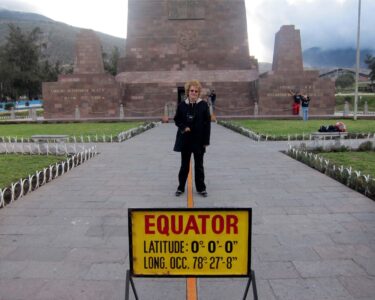
The equator runs 26 km (16 miles) north of Quito, and there you can have your photo taken with your left foot in one hemisphere and your right foot in a completely different one.
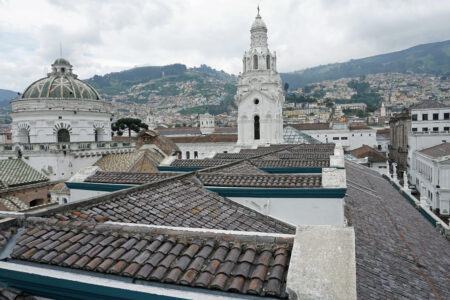
It’s a fun photo opportunity, but Quito deserves to be remembered for much more than that. Its beautifully preserved historic center was added to the UNESCO list back in 1978.
I’ve often told myself that travel stories should be written immediately, while every detail is still fresh. Unfortunately, sixteen years later, many of my memories of Quito have faded. The amusing incidents, the conversations, the little discoveries—they’re gone, so I won’t attempt to write about Quito now. I mention the city only because you can fly to the Galápagos either via Quito—which is what we did on our first visit—or via Guayaquil, Ecuador’s largest city, which is the route we took in 2026.
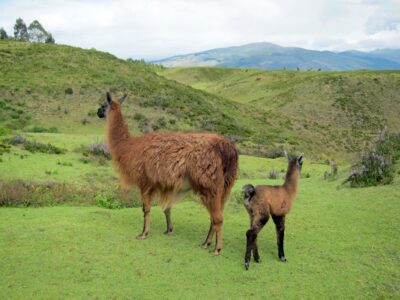
If high altitude doesn’t bother you, I’d recommend spending a couple of days in Quito before heading to the islands. It’s well worth your time.
One word of advice, though: both Quito and Guayaquil require the same common sense as many other large cities. It’s best to explore with a knowledgeable guide or with local friends, as we did.

The Galápagos Islands—an Ecuadorian archipelago in the eastern Pacific Ocean—are famous for many reasons. Charles Darwin visited them in 1835, and his observations of the differences between animals on various islands helped him formulate the theory of evolution.
His legacy is honored throughout the islands, and we visited the Charles Darwin Research Station—located in the town of Puerto Ayora on Santa Cruz Island—twice.
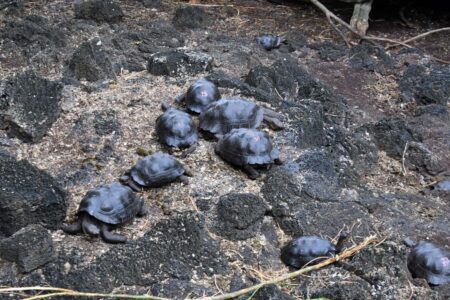
Numerous research projects and conservation efforts aimed at preserving the unique flora and fauna of the Galápagos are conducted at this station under the auspices of UNESCO. The young giant tortoises we saw will eventually be released onto islands where wild populations need reinforcement.
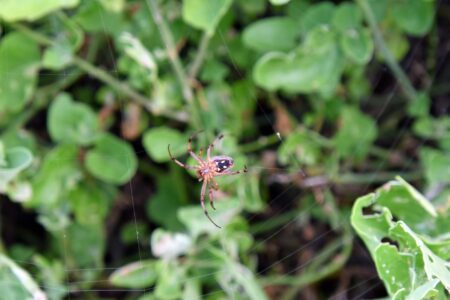
But with all due respect to Darwin, the real stars of the Galápagos are the animals themselves.
I’ve traveled to many extraordinary places, but nowhere else have I experienced wildlife quite like this. The animals don’t simply tolerate people—they seem to trust them completely. Birds continue feeding their chicks while you’re standing nearby. Sea lions sleep soundly beside walking paths. Giant tortoises barely bother to look up as you pass. It’s an unforgettable feeling.
There are various ways to explore these islands. We experienced two of them, and, in my opinion, each has its own advantages.
In 2010, we simply flew to the Galápagos from Quito. However, the word “simply” comes with a caveat. For me, the place with the strictest limits on tourist numbers was Easter Island; I have written about it previously, and those notes can be found on my blog. The Galápagos are somewhat easier to visit, but not by much. Only two airlines—Avianca and Latam—operate regular flights to the islands, so I wouldn’t wait too long before booking your tickets.
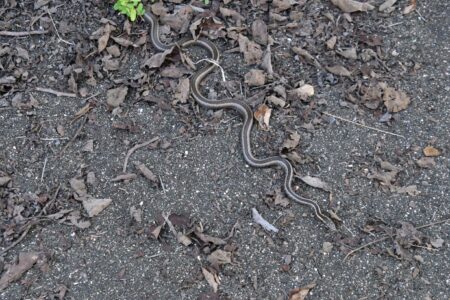
Back in 2010, we reserved a hotel in advance but left the rest of the planning until we arrived. Once we arrived to the main tourist hub of Puerto Ayora on Santa Cruz, we visited a local tour agency and booked day trips to different islands. Every morning we set off in small boats.
If you don’t get seasick in a small boat on the open ocean, consider yourself fortunate. I wasn’t so lucky. At that time, I knew very little about seasickness medications, and every boat ride was an ordeal. But the moment we stepped ashore, the magic began and pure happiness set in.
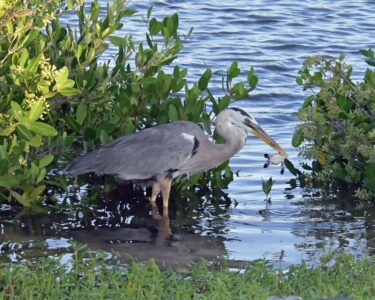
I didn’t get my first camera with a serious lens until later, but my trusty little Canon took perfectly acceptable portraits, and the animals and birds seemed delighted to pose for me.
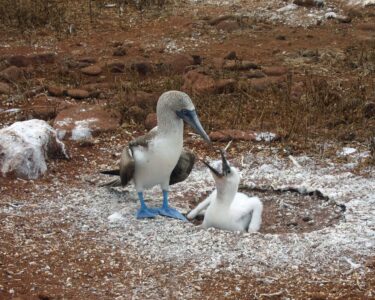
They opened their mouths and beaks, fed their babies, and struck the most entertaining poses.
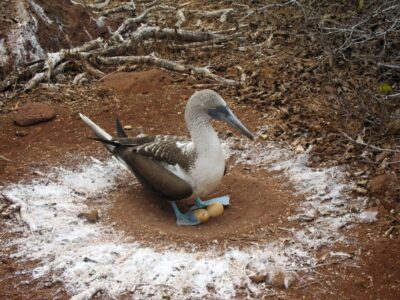
I completely fell in love with the blue-footed booby. Its English name delights me. “Booby” can mean a fool, a simpleton, or a lovable idiot—and these blue-footed goofballs certainly live up to the name. They are simply irresistible.
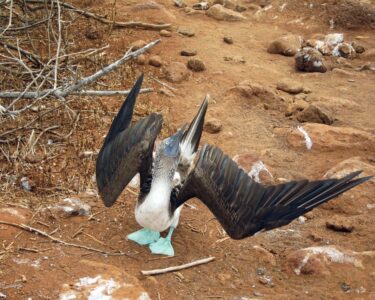
In this photograph, I captured one moment from the male’s courtship dance. He proudly lifts one brilliant blue foot after another, whistles, and raises his wings and beak toward the sky, advertising himself as the ideal husband and father. A goofball is a goofball—even in the Galápagos.
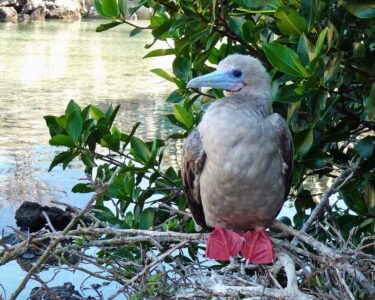
This is also a booby, but a red-footed one. It is slightly smaller, nests in trees and bushes, and is every bit as sociable and handsome—but I didn’t encounter it until 2026, and my heart was already taken by its blue-footed cousin.
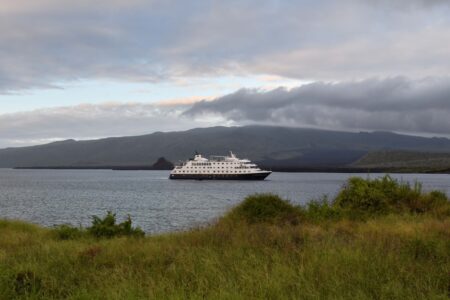
Now is the perfect time to talk about our trip in ’26. Our decision to return, after talking about it for so many years, came almost overnight; we decided against retracing our previous steps and opted instead to sail to the region by ship. “If we’re going to do it,” we told ourselves, “let’s do it properly.” After considering the options, we chose the best-known expedition company—National Geographic.
This was our home for the next week: a small expedition ship carrying no more than 96 passengers. We didn’t get to choose the ship or the cabin ourselves; by the time we decided to go, all the spots for that summer were already sold out. We put our names on the waiting list, and when two spots opened up, we snapped them right up. The cabin turned out to be a poor choice: it was on the lowest deck, right next to the anchor machinery, and the noise and grinding sounds kept us awake at night. On an already physically demanding expedition, the lack of sleep made the trip much more difficult for me. I mention this only as a word of advice: if you have a choice, pay close attention to your cabin location. That’s it—from this point on, I’ll write only about the good things.
If we compare our two trips—and set aside the lack of sleep and the cost—the voyage by ship offered some major advantages. The first, and by far the most important, was the quality of the guides. National Geographic clearly takes great care in selecting them. They were knowledgeable, enthusiastic, and genuinely passionate about the islands.
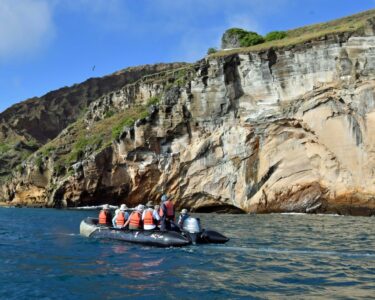
The second advantage, at least for me, was that I no longer had to endure long rides in small boats across the open ocean. Small boats were used only to ferry us from the ship to shore or for Zodiac excursions along the coastline. These rigid inflatable Zodiac boats became our front-row seats to the islands’ wildlife. Perched on their hard—not particularly comfortable—rubber tubes, we watched birds soaring overhead, sea lions swimming alongside us, and an astonishing variety of marine life visible beneath the crystal-clear water.
The Zodiacs never pulled up to a dock. Instead, we usually stepped into knee-deep water and waded ashore. Shorts and sturdy water shoes that could handle sand, rocks, and shallow surf would have been invaluable. I mention this because I certainly would have appreciated that advice before my trip.
We were told right from the start that this was an expedition, not a cruise, and that we shouldn’t expect an easy ride. We were roused incredibly early; breakfast was usually at 6:00 or 6:30 a.m., and the groups would set off immediately—some for a brisk hike, others for a more leisurely walk, a Zodiac excursion, a glass-bottom boat trip, a swim, or snorkeling—keeping at it all day long with just a short break for lunch.
No one was forcing us at gunpoint, but the eternal thirst for new experiences won out—at least for me. I’m very glad it did, because every excursion brought new and unforgettable experiences.
I’ve already introduced you to my favorite blue-footed boobies. Now, let’s meet some of the other remarkable inhabitants of these extraordinary islands.
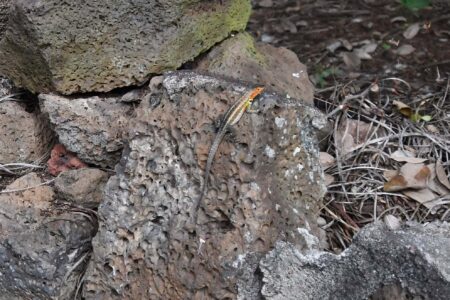
This time, I was equipped with a fantastic camera and an excellent zoom lens. Unfortunately, the very first evening the lens stopped zooming; apparently, some fine sand had found its way inside it. I was devastated, but as it turned out, even without the zoom I managed to take over a thousand interesting photos. I’ll try to select the most representative ones.
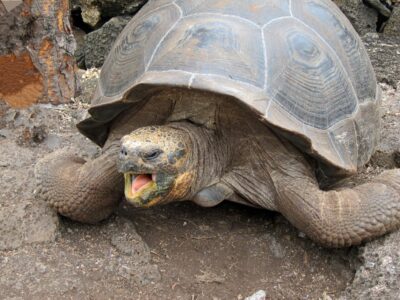
The undisputed celebrity of the Galápagos is the giant tortoise. These gentle giants can weigh more than 400 kilograms (880 pounds). In the wild they live up to 100 years, while in captivity, a tortoise named Harriet lived to be 175. These guys must be doing something right.
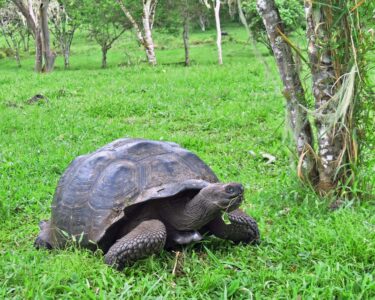
In the 16th century there were more than 250,000 giant tortoises on the islands; by the 1970s, only about 3,000 remained. Of the original fifteen subspecies, ten survive today. An eleventh subspecies went extinct—one might say—right before our eyes. Its last representative, the famous Lonesome George, was still alive when we visited in 2010. He died two years later.
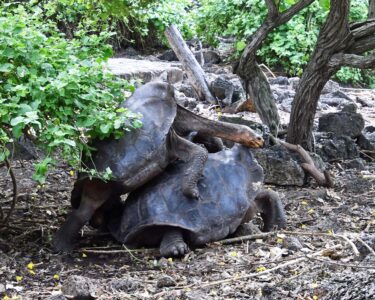
Giant tortoises do everything at their own leisurely pace. They walk slowly, eat slowly, and reproduce very slowly. Thanks to decades of conservation, their numbers have recovered to around 19,000, but they are still considered a vulnerable species.
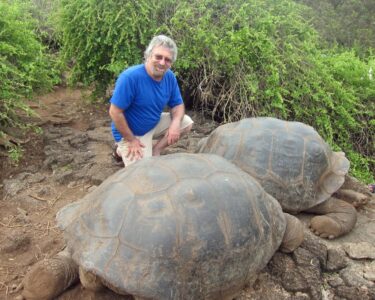
This photograph from 2010 not only shows how enormous they are but also how completely unafraid they are of people. They didn’t even bother withdrawing their heads into their shells.
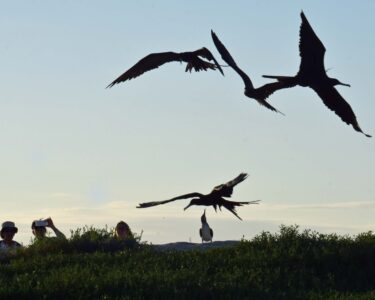
The islands are home to some truly impressive birds: frigatebirds. The most striking of these is the magnificent frigatebird, which reaches about 110 centimeters (43 inches) in length, with an astonishing wingspan of up to 230 centimeters (7½ feet). These aerial pirates constantly patrol the skies overhead, stealing catches from other birds, trying to wrest away their prey, and sometimes even managing to snatch the chicks of other species during low-level swoops. Here, I captured the moment when a feathered bandit attempted to steal an egg from the nest of a vigilant blue-footed booby.
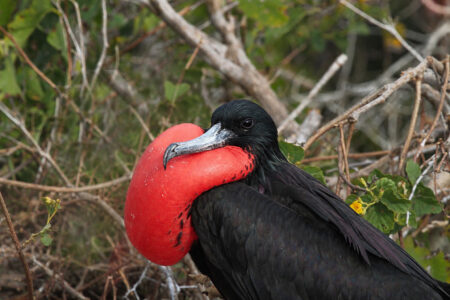
This handsome fellow is, naturally, a male. The brighter his vivid red throat pouch, the better are his chances of impressing a female and persuading her to settle into the nest he has built in the tree.
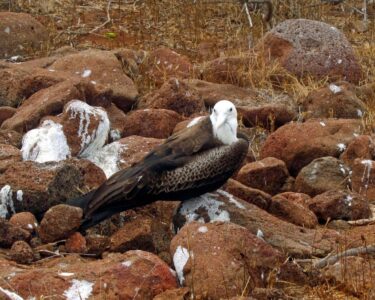
And here is the female—also quite an impressive bird with an elegant black-and-white plumage. Once she chooses her mate, they will share love, friendship, and the joint rearing of their offsprings. One might well envy these birds: one glance at bright blue feet or a magnificent red throat pouch, and you immediately know whether the future husband will be a good provider and a helpful partner around the house—or rather, the nest.
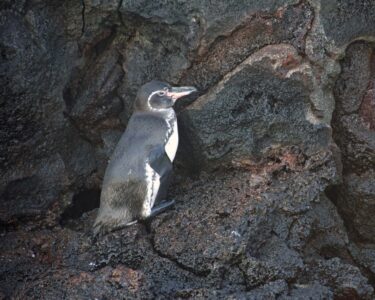
The Galápagos penguin is one of the smallest penguin species in the world, but what makes it truly remarkable is its habitat. While all respectable penguins live in icy southern waters, this one has made itself comfortable right on the equator.
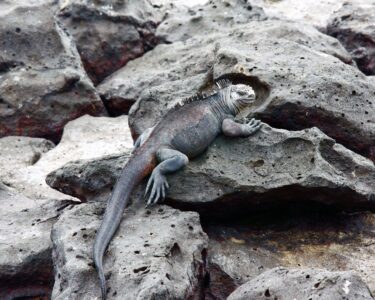
This photo shows a unique marine iguana that spends most of its time feeding in the ocean.
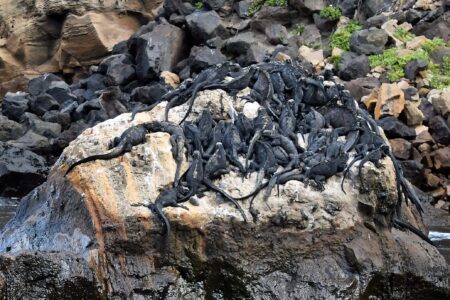
Marine iguanas can remain underwater for nearly an hour. They feed primarily on algae, and after a meal come ashore to bask in the tropical sun.
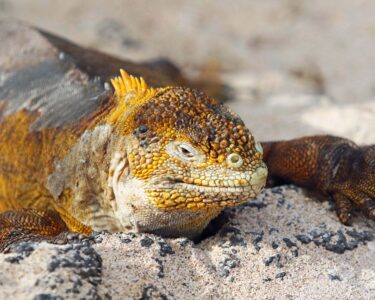
Their cousin, the Galápagos land iguana, is equally impressive. Both species grow to about 1.5 meters (5 feet) in length and look like miniature dinosaurs. The land iguanas are much easier to photograph, as they simply lie around on the sand everywhere.
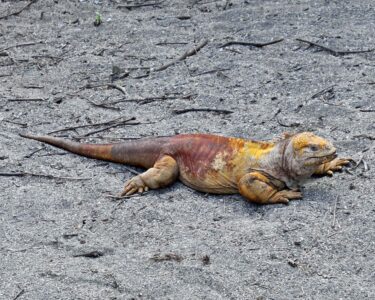
They are primarily vegetarians, feeding on cactus pads and other plants, from which they also obtain much of their water. Every now and then, however, they won’t object to an unfortunate caterpillar or spider.
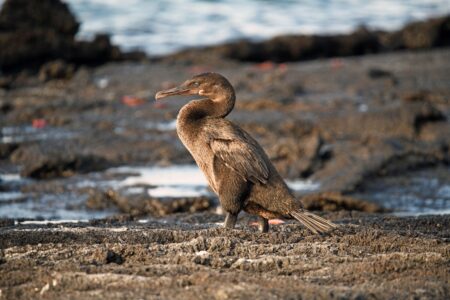
At first glance, this bird looks like an ordinary cormorant. But this is the Galápagos, and even the cormorant here is extraordinary too—specifically, it is flightless. This bird lives on only two islands, and life there is so comfortable and plentiful that it has lost the ability to fly. Just look at its tiny wings; they would need to be three times longer to lift such a well-fed bird. Today only about 900 of them remain.
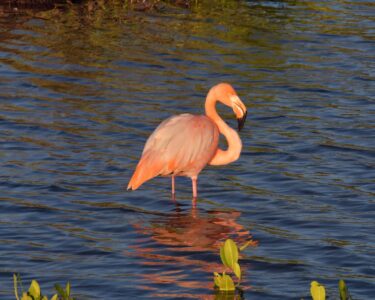
And this, as you can see, is a regular flamingo—but with beautiful, rich coloring. It turns out that the more shrimp they eat, the brighter their pink color becomes. It seems there is no shortage of shrimp in the Galápagos.
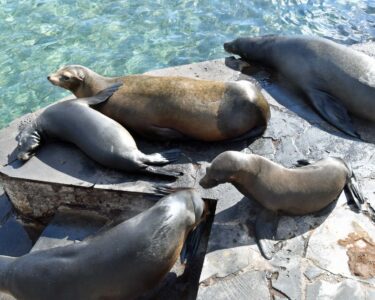
Sea lions and seals lounge on almost every beach like aimless vagrants. They swim in the water and approach small boats, poking their whiskered faces above the surface to inspect the visitors. They are completely at ease and don’t even budge if you get right up close to them.
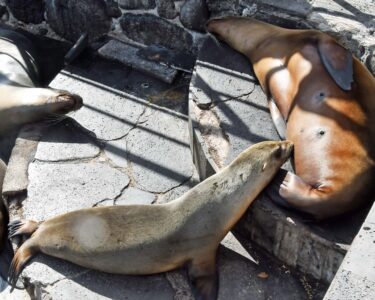
Here, a pup is enjoying lunch while its mother catches up on her sleep.
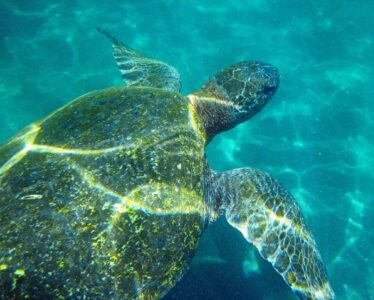
The crystal-clear waters are also home to the endangered Galápagos green sea turtle. They have beautiful shells and, unfortunately, delicious meat. Another common name for them—”soup turtle”—explains all too well why they became endangered. Today they are protected, and I sincerely hope they survive. Encountering them in the clear water is an unforgettable experience.
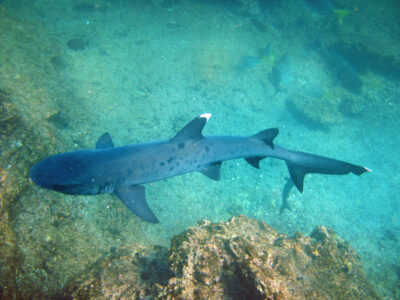
I took this photo from a glass-bottom boat; the water wasn’t very clear, so the quality reflects that, but you can still see a white-tip reef shark. Despite their intimidating name, these sharks are small and harmless to swimmers.
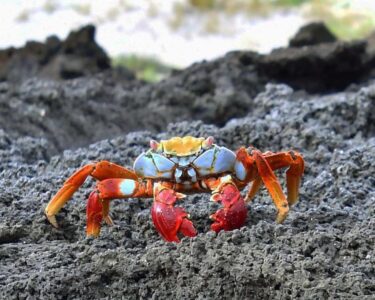
These red-orange crabs are very picturesque, eat just about anything, and have a funny English name: the Sally Lightfoot crab. According to legend, Sally Lightfoot was an incredibly agile Caribbean dancer, and the name suits these nimble crabs perfectly.
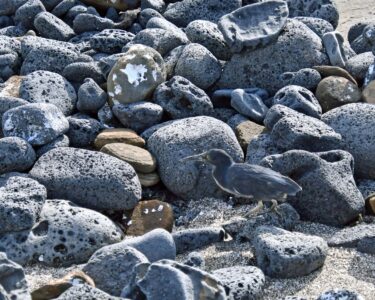
This is another local resident – the lava heron. Look how wonderfully it camouflages itself against the black volcanic rocks. With such camouflage, catching an unsuspecting crab or small fish becomes much easier.
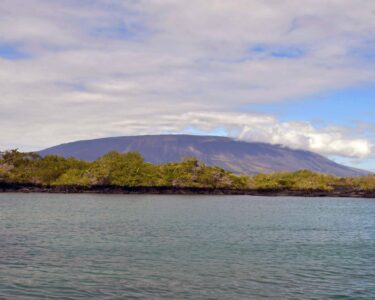
The Galápagos Islands are entirely volcanic in origin, and the youngest among them are still in the process of formation. The archipelago contains thirteen active volcanoes, and the most recent significant eruption occurred quite recently, in 2024.
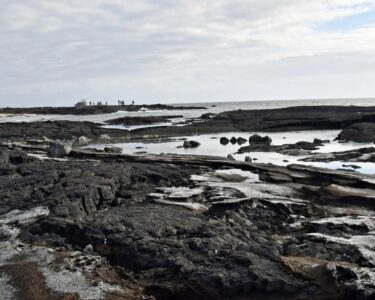
On some islands, you have to walk across lava fields, hopping from one hardened mound of lava to another.
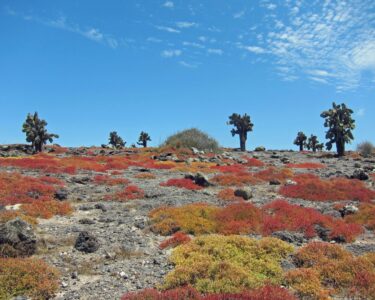
And here is a completely different landscape, which I photographed in 2010.
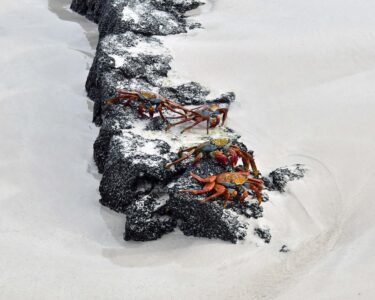
Due to the volcanic origin of the islands, the beaches themselves offer amazing variety: we saw beaches with black, red, and white sand—like the one in the photo—and on one island, the sand is an incredibly rare olive-green, though, unfortunately, we didn’t make it there.
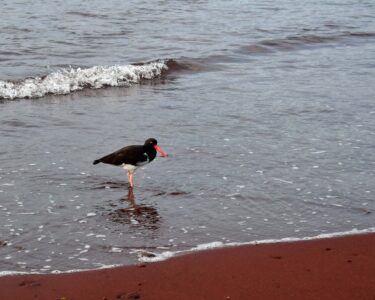
In this photo, you see red sand and an oystercatcher. For some reason, I didn’t take a picture of the black, lava-colored sand.
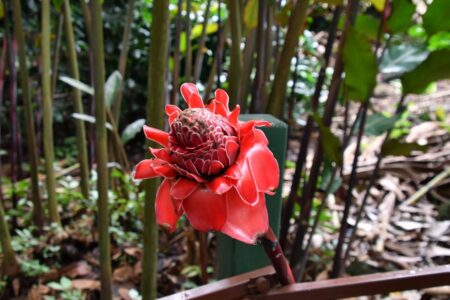
And finally, so the islands’ flora won’t feel neglected, here is ginger in bloom.
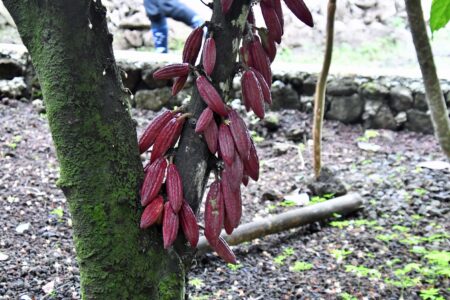
This photograph is dedicated to fellow chocolate lovers—including me. You’re looking at cacao pods.
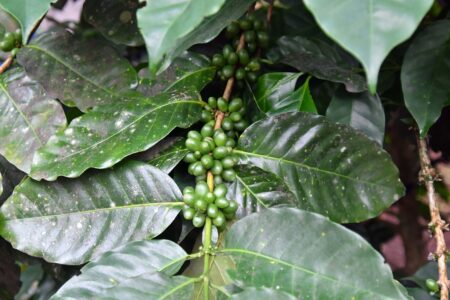
If, like me, you love having a cup of coffee in the morning, this shot is for you.
And that brings my Galápagos story to an end. The rest is up to you. Should you go? Absolutely. How should you travel? That’s for you to decide. And when? Every season offers something special.
Whatever you choose, I wish you wonderful adventures and unforgettable journeys.
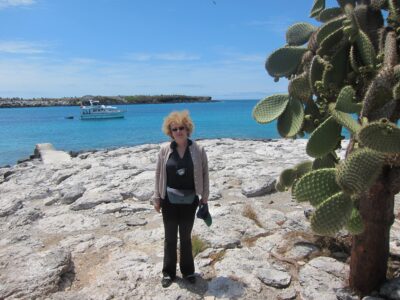
Margaret Mordukhovich, Ann Arbor, Michigan, July 2026
Copyright @ Margaret Mordukhovich, www.maratravelblog.com
Свежие комментарии